

Why Mahjong Is Suddenly Everywhere
- Mar 30
- 2 min read
Why Mahjong Is Suddenly Everywhere
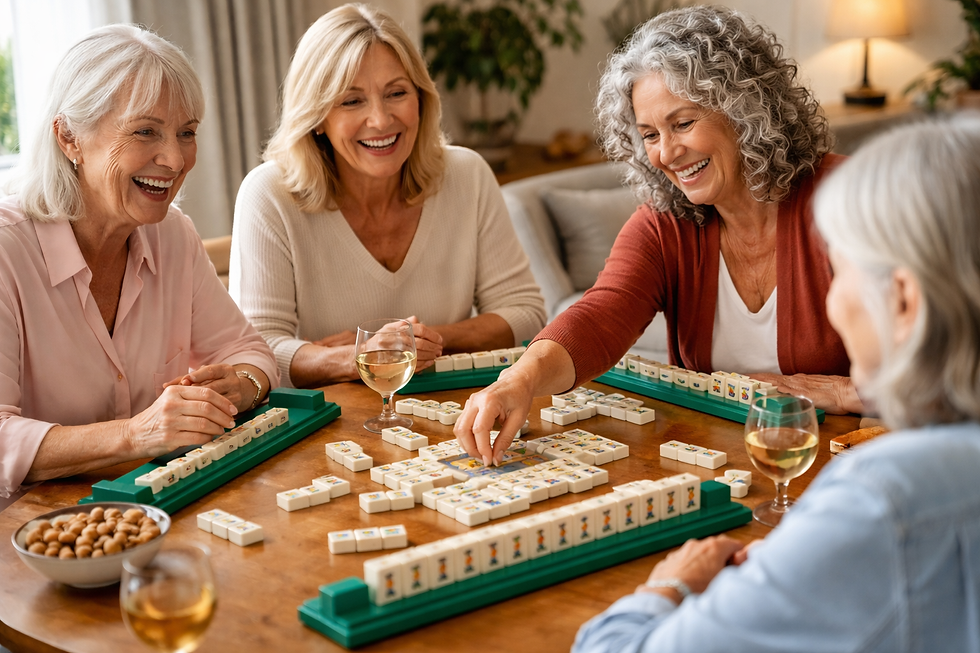
Once associated with grandparents’ card tables or dimly lit game rooms, mahjong has quietly—and then all at once—become one of the most popular social games of the moment. From chic living rooms to wine-fueled girls’ nights and even stylish retreats, mahjong is enjoying a full-fledged renaissance. So why now?
The answer lies in a perfect storm of nostalgia, community, mindfulness, and modern reinvention.
A Game Built for Connection
At its heart, mahjong is a social ritual. Unlike solitary phone games or fast-paced party games, mahjong asks players to sit together, linger, talk, laugh, and gently compete. Games can last hours, encouraging conversation and connection without the pressure of constant stimulation.
In a world increasingly dominated by screens and quick hits of entertainment, mahjong offers something rare: unrushed togetherness.
Nostalgia Meets Reinvention
Many new players are drawn to mahjong through family memories—watching mothers, grandmothers, or aunts play around a kitchen table. That emotional thread gives the game a sense of continuity and comfort.
What’s different now is how the game has been reimagined. Today’s mahjong sets feature:
Stylish color palettes
Personalized tiles
Modern racks, mats, and carrying cases
Updated rule cards and beginner-friendly guides
It feels less like an old pastime and more like a beautiful lifestyle hobby.
A Mindful Alternative to Screens
Mahjong requires focus, strategy, and pattern recognition—without the stress or urgency of digital games. Players describe it as mentally absorbing but calming, similar to puzzles or knitting.
In an era of burnout and constant notifications, mahjong offers:
A break from phones
Gentle mental stimulation
A satisfying sense of flow
It’s engaging without being exhausting.
Perfect for the Way We Gather Now
Mahjong fits seamlessly into modern social life. It works just as well for:
Weekly standing get-togethers
Wine nights with friends
Multi-generational family time
Retreats, clubs, and community groups
There’s no athleticism required, no age limit, and no need to be “good” to enjoy it. Everyone can participate, learn, and improve together.
Appealing Especially to Women
A large part of mahjong’s resurgence has been driven by women—particularly those seeking meaningful ways to connect beyond work and family obligations.
For many, mahjong has become:
A reason to host regularly
A built-in social calendar
A creative outlet (sets, tablescapes, rituals)
A space for friendship and conversation
It’s competitive, but collaborative. Strategic, but forgiving. Social, but structured.
The Rise of Intentional Leisure
Perhaps most importantly, mahjong reflects a broader cultural shift. People are craving intentional leisure—activities that feel purposeful, grounding, and shared.
Mahjong isn’t about winning quickly. It’s about:
Showing up
Paying attention
Learning something over time
Enjoying the process
That ethos resonates deeply right now.
More Than a Game
Mahjong’s popularity isn’t a trend built on novelty—it’s rooted in human connection. As more people seek community, creativity, and moments of calm, this centuries-old game feels surprisingly modern.
In a noisy world, mahjong invites us to slow down, pull up a chair, and stay awhile.
Comments